

New Rat City: Setting Explanation

Updated: Aug 27

Next week, I intend to share a shortish story based in the setting of the upcoming novel Angel @ the End of the World, listed on the Books sub-page of this website. Before I do that, though, I thought that some explanation of the setting might be in order.
The front cover shown above is for a hypothetical collection of short stories set in New Rat City, my version of the reasonably grim and somewhat dark, but also not altogether hopeless futurepunk universe of high tech and low life. Of course there are plenty of authors who have worked in this medium, to varying degrees of success. Personally, I've never really cared much for the work of Philip K. Dick, though I do recognize his works as critically seminal (just because something is important and Should Be Read doesn't mean I have to like it), and I am perpetually ambivalent about Michael Moorcock and Roger Zelazney (actually, I think I'd love almost everything by Zelazney if only he didn't have the awful habit of just stopping when writing, rather than actually developing decent endings; when he actually does have an ending on his works, like with Damnation Alley, they're fantastic). On the other hand, I'm rather fond of William Gibson's works in general and his Sprawl Trilogy and the Blue Ant series in particular, I absolutely love most of what Walter Jon Williams does, and I am deeply enamored of Neal Stephenson's novel Snow Crash (though I can't speak for his other works yet: I'm so concerned that I might not enjoy them like I did Snow Crash that I've been afraid to start, I'm rather embarrassed to admit).
And then there's me, with just one lone, solitary officially published book to my name (as of this writing). Ah well, this, I suppose, is where being a conscious optimist comes in handy.
To explain the world of New Rat City in brief, though: the Japanese developed the first fully sapient artificial intelligence (not an iteration engine, like ChatGPT, but an actual intelligence), which they named Geryon. Geryon (who, in spite of the name, identifies as female) is integrated into a powerful anti-nuclear weapon system of powerful containment force fields - not offensive weaponry, but strictly defensive in nature - and then launched into space, negating all concerns of widespread nuclear devastation. Her name, incidentally, comes from the following quote from The Inferno of Dante Alighieri:
“Behold the beast who bears the pointed tail,
who crosses mountains, shatters weapons, walls!
Behold the one whose stench fills all the world!"
(Oh, and bonus points if you noticed the additional link - I just really like that science fiction version of Dante's work, as well as its sequel, and think it deserves more love. Also, I really do love Gustave Dore's works, such as the picture above.)
Stymied on the war front just as a new and greater genetic engineering revolution begins (and yes, the idea does come somewhat from a certain tabletop roleplaying game - as I've said in previous blog posts, roleplaying books are where I get huge swaths of my inspirations, which I then take in my own direction), new and more terrible weapons of war are developed, and soon the whole world is engulfed in conflicts. These conflicts are made worse because the weapons deployed are so very insidious: genetically engineered diseases, fungal and bacterial and retroviral, that target the soil from which food is supposed to come. This indirect method of attack wasn't even on the radar for most people, and neither were the various indirect diseases, the ones that didn't harm their victims directly, but instead targeted their genes, killing generations unborn.
Then these warped creations were brought into play on actual "hot" battlefields, turning the modern killing grounds into a new sort of ecology, hostile to all non-native life. To meet the needs of this new sort of environment, new creatures are crafted. First there were the terries, short for teratomorph, animal-like monsters, creatures made to be beasts-of-war, but lacking the capacities of people (even the ones that are objectively smarter than humans are still just animals, and act according to their natures). Then, recognizing the need for intelligent soldiers, world governments began to field frankies, named after Frankenstein's monster, super-soldiers based on human genetics, either created from genetic manipulation or from post-partum adjustments. (Oh, and incidentally, I love Dr. Chris Raynor's videos generally, and recommend them, though I freely admit they can get pretty "gooey.")
Finally, when terries proved near-impossible to control and frankies evoked near-universal horror from the international community, as well as legal sanctions against their creators (though there are still small-scale operations who continue to produce them to this day), the powers at war finally decided on morphs - or, more properly, mmmorphs, short for "anthropormophic teratomorphic theriomorphs"or humanlike animal-people, based entirely on human genetics in spite of their bestial appearances (they're basically human genes adjusted so as to allow them to provide the advantages of animal shapes), but "sold" to the world at large as a sort of biological android, a non-person not deserving of legal protections under international law. Since legal rules don't have to conform to scientific or social reality, and since the changes to their bodies often cause morphs to "go feral," tapping too deeply into the darker parts of our most instinctive selves until they can't find their way back, morphs are generally considered to be something less than animals but more than human, to be feared and hated outside of the enclaves of their own making or the narrow range of jobs to which society has shunted them.
Of course, the human population is a lot lower these days than it was, so the opinion of baseliners (as non-augmented or adjusted humans are often called) isn't nearly as important as it once was. Society as a whole has changed forever, and a new Dark Age has begun, with all the traditional hallmarks of such a descent:
Features of a general systems collapse:
1) central administrative organizations
2) traditional elite class
3) centralized economy
4) settlement shifts and population decline
Or, as Robert A. Heinlein put it:
“A dying culture invariably exhibits personal rudeness. Bad manners. Lack of consideration for others in minor matters. A loss of politeness, of gentle manners, is more significant than is a riot.”
Heh, amusingly enough, and very apropos, he also said this:
"How we behave toward cats here below determines our status in heaven."
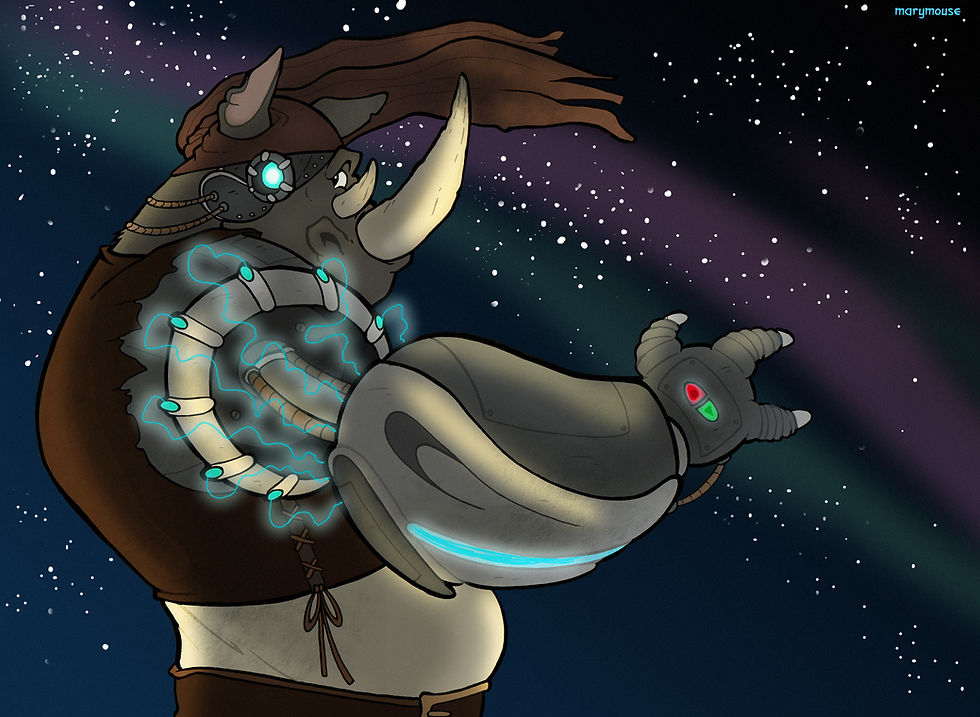
With congos and chaebols the de-facto rulers of large swaths of the planet, and most of the ultra-rich having left the planet entirely for orbital pleasure palaces, while the planet below has gradually become a bit more habitable with the decrease of humanity's pressure on its ecosystems, the morphs presently mostly live in the vast urban sprawls of the megalopoli that humanity built as the population peaked out to a dangerous extreme, right before the critical collapse following the Age of Plagues. New Rat City is the morph-dominated area of what was once the Eastern Seaboard Megalopolis (based on an actual region in our day, taken to its cyberpunk extreme), named after the most common sort of morph that one is likely to encounter there. The title Contact Points for the hypothetical short story collection mentioned above comes from the main theme of the stories: the points of contact and conflict where baseline humanity encounters the new inheritors of the Earth, the morphs.
As a final point, because I simply can't help myself, and also because I suppose that I've always had a weakness for "kitchen sink" settings that play fast and loose with genre conventions, like Rifts and Shadowrun (though, I am sorry to say, I've personally found the system used by Palladium Games to be deeply unsatisfying, and Shadowrun's various systems over the years to be far too easily broken, though in both cases I absolutely adore the settings and happily make use of them...using someone else's ruleset), New Rat City is not a strict science fiction universe. Drawing heavily from the old World of Darkness and also from the far more recent Harry Dresden series of novels, it's more of a low-key "secret supernatural" kind of world, a state that has only grown more exacerbated with the breakdown of humankind's systems of society, which mirrors a similar breakdown of the barriers between worlds. The time of the eschaton draws near, and for all of corrupt humanity's efforts to escape the sins whose consequences they thought they could leave behind on Earth when they left for the heavens, there is yet a reckoning to be had, and it will not be gentle with these corrupt ones.
Morphs have been encountering supernatural creatures for quite some time as a standard part of being creatures literally made to survive on the borders between worlds, and aren't especially bothered by what they've met and often had to fight in the battlefields of their world. After all, when your version of normal starts with being decanted from a vat and thrust minutes later into a lethal combat zone right out of the nightmarescapes of Zdzisław Beksiński, facing off against ghouls, vampires, werewolves, and demons straight out of Hell is just another Tuesday at the office.
That untitled work by Beksiński, by the way, should be quite enough to explain why I love his art so very much. Since I don't want to do all the work for you, because I think you'll appreciate the treasures you discover more than way, I'll leave the search for more of his works to your individual efforts.
Oh! But I shouldn't forget Jakub Różalski while I'm on the topic of nifty Polish artists!
Especially since he does such a lovely mix of the retro-technological with the supernatural. While I could have - and probably should have - included one of his works that mix werewolves and mecha, the work above just hit me with such pathos that I had to share it instead. I know the werewolf above is probably a monster, probably a threat to humanity. But it's also a wounded creature, fleeing in fear from a howling and blood-maddened mob. Based on my own background, I can't help but feel a certain degree of both sympathy and empathy.
All of which should give enough of a background to properly enjoy the next posting on this blog: the short story from New Rat City, The Lady Was Red. Stay tuned.


Comments